
Parking & Traffic
Featured Products





About Our Parking & Traffic
Effective traffic management is crucial for maintaining safety and order in business parking lots, residential roadways, and private driveways. Our comprehensive collection of parking and traffic signs allows property owners to clearly designate reserved spaces, enforce speed limits, and control vehicle access. By providing distinct visual cues, you can effortlessly guide visitors, prevent unauthorized parking, and significantly reduce the risk of accidents in high-activity areas.
- Features high-intensity reflectivity to ensure maximum visibility for drivers during day or night.
- Constructed from heavy-duty, weather-resistant materials designed to withstand harsh outdoor elements.
- Utilizes bold, standardized graphics to ensure immediate compliance and clear communication.
- Designed for versatility with easy mounting options for fences, posts, or walls.
The Critical Role of Parking & Traffic Signs in Safety and Order
For any commercial property, from sprawling shopping centers to compact office parks, the management of vehicle and pedestrian flow is paramount. Effective Parking & Traffic signs are not merely decorative elements; they are the silent directors of a complex daily ballet. They create a structured environment that prevents accidents, ensures efficient movement, and protects the property owner from significant legal and financial risks. Investing in high-quality, compliant signage is one of the most critical operational decisions a property manager can make, forming the bedrock of a safe, accessible, and professionally managed facility.
Beyond Aesthetics: The Legal and Financial Imperative
The primary function of parking lot signs and traffic control signs is to establish order and enforce rules that ensure safety for everyone. This function carries immense legal weight. Failure to provide clear and compliant signage can lead to preventable accidents, resulting in costly lawsuits, increased insurance premiums, and damage to your business's reputation. Local and federal regulations, such as the Americans with Disabilities Act (ADA), mandate specific signage for accessibility. Non-compliance isn't just an oversight; it's a violation that can attract hefty fines and legal challenges.
Expert Recommendation: Property managers should view their signage budget not as an expense, but as an investment in liability reduction. A single lawsuit averted by a well-placed Stop Sign or a clearly marked pedestrian crossing can save a company hundreds of thousands of dollars. Always prioritize regulatory compliance to safeguard your assets.
Furthermore, well-managed traffic flow has a direct financial benefit. When customers, tenants, and employees can navigate your property easily and find parking without frustration, their overall experience improves. In a retail setting, this translates to longer stays and increased spending. In an office environment, it means less wasted time and happier employees. The efficiency gained from strategic signage is a tangible asset that contributes to the property's bottom line.
Enhancing User Experience and Brand Perception
Imagine arriving at a large commercial property with confusing lanes, no clear directions to visitor parking, and a chaotic exit process. This initial impression can create frustration and anxiety, negatively coloring the entire visitor experience. Conversely, a property with clear, easy-to-read, and strategically placed Property & Facility signs communicates professionalism, competence, and a genuine concern for visitor safety and convenience. The quality of your signage directly reflects the quality of your management and your brand. Faded, damaged, or amateurish signs suggest neglect, while crisp, durable, and reflective signs project an image of a well-maintained and secure environment. This positive perception builds trust and encourages repeat business, making effective traffic management a powerful tool for customer retention.
This organized environment created by clear signage is the first step in a visitor's journey on your property, and getting it right is essential before they even step out of their vehicle. The next step is understanding the specific types of signs needed to achieve this seamless experience.
Understanding the Types of Parking & Traffic Signs
A comprehensive signage strategy involves a mix of different sign types, each serving a distinct purpose. These can be broadly categorized into regulatory, warning, and guide signs. Understanding the role of each category is crucial for developing a system that is both compliant and effective for your specific property's needs. The essential parking signs for a business will always include a combination of these three types to ensure safety, order, and easy navigation.
Regulatory Signs: Enforcing the Rules
Regulatory signs are the backbone of traffic control. They inform road users of traffic laws or regulations and are legally enforceable. Disregarding them can result in citations or, in a private lot, towing actions. These are the most critical signs for mitigating liability and maintaining order.
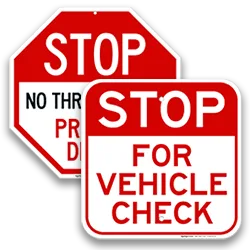
- Stop Signs and Speed Limits: The most fundamental safety signs. Speed Limit Signs help control vehicle velocity, reducing the risk of serious accidents, while Stop Signs ensure drivers yield at critical intersections.
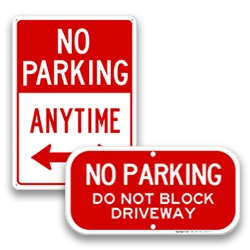
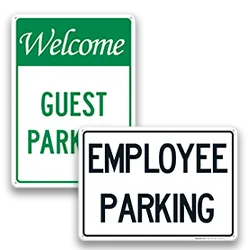
- Parking Control: This subcategory is extensive and vital for managing lot capacity. It includes No Parking Signs to keep fire lanes and access points clear, No Parking Tow-Away Signs that clearly state the consequences of violations, and Assigned Parking Signs for tenants or employees.
- Directional Flow: Signs like Do Not Enter Traffic Signs and One Way Signs are essential for preventing head-on collisions in parking garages and narrow lanes.
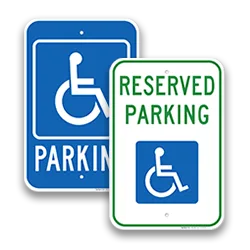
- ADA Compliance: Perhaps the most important regulatory signs are Federal ADA Handicap Parking Signs. These must be placed correctly and meet specific federal requirements for size, color, and symbols to ensure accessibility and avoid significant legal penalties.
Warning Signs: Proactive Hazard Prevention
Unlike regulatory signs that enforce laws, warning signs are designed to alert drivers to potential hazards or upcoming changes in road conditions. They are a proactive measure to prevent accidents by giving drivers enough time to react. On a commercial property, common warning signs include "Pedestrian Crossing," "Speed Bump Ahead," "Clearance X ft," and "Slippery When Wet." These road safety signs are crucial in areas with high pedestrian traffic, multi-level parking structures, or specific environmental risks. By proactively alerting visitors to potential dangers, you demonstrate due diligence and further reduce your property's liability exposure.
Guide Signs: Simplifying Navigation
Guide signs are all about user experience. Their purpose is to help drivers navigate your property with ease and confidence. A frustrated, lost driver is more likely to make erratic maneuvers, creating a safety risk. Effective guide signs eliminate this confusion. This category includes everything from large Parking Lot Entrance Signs that welcome visitors and provide initial direction, to smaller Parking Lot Arrow Signs that point the way to specific zones like "Visitor Parking," "Deliveries," or "Exit." By clearly marking routes, you streamline traffic flow, reduce congestion, and create a welcoming environment that leaves a positive, lasting impression on every visitor. While these signs establish the rules and directions, their effectiveness hinges entirely on their physical characteristics and quality.
Key Features of High-Quality, Durable Parking & Traffic Signs
The message on a sign is only as effective as its visibility and longevity. A sign that is faded, bent, or unreadable fails at its primary function and can become a liability in itself. When selecting durable parking signs for business lots, property managers must focus on material quality, reflectivity, and adherence to established standards. These features determine not only how long a sign will last but also how well it performs under various conditions, day or night.
Material Matters: Aluminum, Reflectivity, and Longevity
The best material for outdoor parking signs is, without question, aluminum. It is rust-proof, lightweight yet strong, and withstands harsh weather conditions far better than plastic or steel. However, not all aluminum signs are created equal. Thickness and the type of reflective sheeting applied are critical differentiators. For most traffic control signs, a minimum thickness of .080" aluminum is recommended for its rigidity and resistance to bending from wind or minor impacts. Reflectivity is arguably the most important safety feature, ensuring signs are clearly visible in low-light conditions and at night.
Here’s a comparison of common reflective sheeting grades:
| Reflectivity Grade | Description | Best Use Case | Lifespan |
|---|---|---|---|
| Engineer Grade (EG) | The standard choice for commercial parking lots with good ambient lighting. Uses glass bead technology. | Visitor parking, directional signs, areas with low traffic speeds. | 5-7 years |
| High Intensity Prismatic (HIP) | Significantly brighter than EG due to its prismatic lens structure. Offers wider viewing angles. | Stop signs, speed limit signs, warning signs on main property roads. Required by MUTCD for many road signs. |
10+ years |
| Diamond Grade (DG) | The highest level of reflectivity, providing superior brightness and visibility from the greatest distances. | Critical safety signs, high-speed areas, signs on public-facing roadways, high-risk intersections. | 12+ years |
Choosing the right combination of aluminum thickness and reflective grade ensures your investment is durable, compliant, and effective for years to come.
Compliance is Non-Negotiable: MUTCD and ADA Standards
Visual appeal and durability are important, but legal compliance is paramount. In the United States, the design and application of traffic control devices are governed by the Manual on Uniform Traffic Control Devices (MUTCD). This manual specifies the exact shapes, colors, sizes, and legends for signs to ensure they are universally understood. For instance, an octagonal sign must be red with a white border and the word "STOP" in white letters. Deviating from these standards can render a sign legally unenforceable and expose the property owner to immense liability if an accident occurs.
Compliance Warning: Using non-compliant signs is a significant legal risk. If an accident occurs and it is determined that your signage did not meet
MUTCDorADAstandards, your liability can increase exponentially. Ensure all regulatory signs are purchased from a reputable supplier like SignMods that guarantees compliance.
Similarly, the Americans with Disabilities Act (ADA) sets forth strict requirements for accessible parking spaces, including the specific design and placement of signs, such as the International Symbol of Access. Adhering to these federal mandates is not optional; it's a legal requirement to ensure equal access for all individuals. By prioritizing fully compliant signage, you are not just following rules—you are actively protecting your business. Once you've selected the right high-quality signs, the next step is to implement them strategically on your property.
Strategic Implementation for Maximum Impact
Purchasing compliant, durable signs is only half the battle. Their placement and installation are just as critical to their effectiveness. A strategic implementation plan ensures that every sign is seen, understood, and obeyed, transforming a collection of individual signs into a cohesive and intuitive traffic management system. This process begins with a thorough evaluation of your property's unique layout and needs.
Conducting a Comprehensive Site Assessment
Before installing a single sign, a property manager should conduct a detailed site assessment. Walk and drive through your property from the perspective of a first-time visitor, an employee, a delivery driver, and a person with disabilities. Document every point of potential confusion, conflict, or hazard.
Consider the following questions during your assessment:
- Where are the primary entry and exit points? Is the flow of traffic clearly defined from the moment a car enters?
- Are there any blind corners, confusing intersections, or areas where vehicle and pedestrian paths cross unexpectedly?
- Where are ADA-accessible parking spaces required by law, and are the access aisles and paths to the entrance clear?
- Is there sufficient and clearly marked parking for different user groups (e.g., visitors, employees, short-term/curbside pickup)?
- Are fire lanes and loading zones explicitly marked with No Parking Tow-Away Signs to prevent obstruction?
A real-world case study illustrates this point perfectly. A mid-sized office park in suburban Chicago was experiencing frequent complaints about a lack of visitor parking and several near-misses in its main lot. After a site assessment, they realized their signage was outdated and poorly placed. They implemented a new plan featuring High Intensity Prismatic Parking Lot Arrow Signs to create a one-way loop, designated a specific area for visitors with clear guide signs, and added "Yield to Pedestrians" signs at crosswalks. Within six months, reported traffic incidents dropped by 40%, and positive feedback from tenants about the improved navigation increased significantly.
Installation Best Practices for Visibility and Durability
Proper installation ensures your signs remain visible and secure for their entire lifespan. According to MUTCD guidelines, signs in parking areas should generally be mounted so that the bottom edge is at least 7 feet above the ground. This height prevents obstruction by parked vehicles and keeps them in the driver's natural line of sight. Signs should be installed at a slight angle away from the road (approximately 93 degrees) to reduce specular glare from headlights at night, making the reflective material more effective. Using tamper-resistant hardware and sturdy, properly anchored posts is also crucial to prevent theft, vandalism, and failure in high winds. A well-installed sign is a reliable sign, continuing to provide safety and direction long after its initial placement.
With a clear understanding of your property's needs and installation best practices, you are now equipped to make the final purchasing decisions.
Choosing the Right Parking & Traffic Signs for Your Property
Selecting the correct Parking & Traffic signs is a critical responsibility for any property manager or business owner. The right choices enhance safety, ensure legal compliance, and improve the overall functionality and perception of your property. By approaching this task methodically, you can build a signage system that is effective, durable, and provides a clear return on investment through reduced risk and improved operational efficiency.
A Checklist for Property Managers and Business Owners
To simplify the selection process, use this checklist to guide your decisions. It synthesizes the key considerations discussed and provides an actionable framework for choosing the most effective parking and traffic control signs for your commercial property.
- Assess Your Needs First: Before browsing products, complete a thorough site assessment. Identify all regulatory, warning, and guidance needs specific to your property's layout, traffic volume, and user types.
- Prioritize Regulatory Compliance: Ensure all mandatory signs—such as Federal ADA Handicap Parking Signs, Stop signs, and Do Not Enter Traffic Signs—strictly adhere to
MUTCDand local code specifications for size, color, and design. This is non-negotiable for liability protection. - Select the Right Material and Reflectivity: For long-term outdoor use, choose heavy-gauge (
.080"or thicker) rust-proof aluminum. Match the reflectivity grade to the sign's location and importance. Use High Intensity Prismatic (HIP) or better for critical safety signs like Stop and Speed Limit Signs. - Focus on Clarity and Readability: Opt for signs with clear, simple fonts and universally understood symbols. Ensure the sign size is appropriate for the viewing distance and the speed at which traffic will be moving.
- Plan for Both Drivers and Pedestrians: Your plan must account for everyone on your property. Incorporate pedestrian crossing signs, clearly marked walkways, and warnings for drivers to yield.
- Invest in a Complete System: Think of your signage as an interconnected system. Use a consistent style and quality across all signs to create a professional, cohesive look. From the main Parking Lot Entrance Signs to the smallest directional arrow, every piece plays a role in creating a safe and navigable environment.
