
Supplemental ADA Handicap Signs


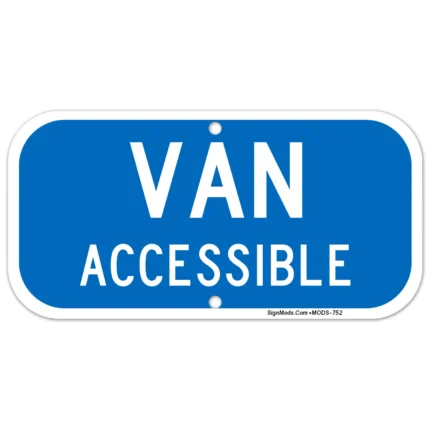

Supplemental ADA Handicap Signs are essential for ensuring accessibility and compliance in public and private spaces. Designed to complement primary ADA signage, these signs provide additional guidance for individuals with disabilities, helping them navigate parking lots, building interiors, and outdoor areas more easily. Commonly used in offices, retail stores, schools, and healthcare facilities, these signs address gaps in visibility and accessibility, promoting equal access for all while enhancing safety and convenience. By clearly marking areas like entrances, exits, restrooms, and parking spaces, they prevent confusion and improve compliance with ADA regulations.
- Enhances accessibility and convenience for individuals with disabilities
- Supports compliance with ADA regulations and legal standards
- Durable and weather-resistant for indoor and outdoor use
- Customizable options available to fit specific needs
What Are Supplemental ADA Handicap Signs?
Defining Supplemental Signage for Accessibility
Supplemental ADA handicap signs are secondary signs placed below or adjacent to primary accessible parking or building signs. While the main sign, often featuring the International Symbol of Access (ISA), designates a space as accessible, supplemental signs provide crucial additional information that is often mandatory for compliance. This includes details about van accessibility, potential fines for improper use, specific reservation status, time limits, or directional cues to an accessible entrance. Their purpose is to eliminate ambiguity, ensure that individuals with disabilities have the specific information they need, and provide property owners with the legal backing to enforce parking rules. They are not standalone signs; they work in tandem with primary signs to create a complete, compliant, and easily understood system for all users.
The Difference Between Primary and Supplemental ADA Signs
A primary accessible sign is the initial identifier. It uses the universally recognized ISA to mark a parking stall, restroom, or building entrance as being accessible. In contrast, supplemental ADA signs add essential context and specificity that the primary symbol alone cannot convey. For example, a primary sign might mark a parking stall, but a van accessible plaque is a required supplemental sign that specifies the larger space is reserved for vehicles equipped with ramps or lifts. The primary sign says "accessible," while the supplemental sign clarifies "how" or "for whom." These two types of signs are not interchangeable; they form a symbiotic relationship. A parking space designated for vans is not fully compliant without both the primary ISA sign and the supplemental "Van-Accessible" sign. Together, they fulfill the detailed requirements set forth by federal and local laws.
Why Supplemental Signage is Crucial for ADA Compliance and Accessibility
Meeting ADA and MUTCD Guidelines
Many business owners mistakenly believe supplemental signs are merely optional suggestions. In reality, they are frequently mandated by the Americans with Disabilities Act (ADA) and the Manual on Uniform Traffic Control Devices (MUTCD), which provides the standards for road and traffic signs. For instance, the 2010 ADA Standards for Accessible Design explicitly require that for every eight accessible parking spaces, at least one must be a van-accessible space, and it must be identified with a supplemental sign. Failure to include these required handicap supplemental signs can result in significant legal and financial consequences. These can range from hefty federal fines and state-level penalties to civil lawsuits. Adhering to these guidelines, such as those found in MUTCD Section 2B.46 regarding parking signage, is not just about avoiding penalties; it's a fundamental aspect of creating a lawful and accessible environment.
Warning: Non-compliance with ADA signage requirements is a common trigger for lawsuits. Ensuring your property has the correct primary and supplemental signs is a critical step in risk management for any property owner or manager.
Enhancing Clarity and Safety for Individuals with Disabilities
Beyond legal mandates, clear signage is a cornerstone of true accessibility and inclusivity. Thoughtfully placed supplemental ADA handicap signs provide the specific details people need to navigate a property safely, efficiently, and with dignity. Imagine a person visiting a large medical campus for the first time; the primary accessible parking sign gets them into a spot, but it's the supplemental Directional arrow signs that guide them along a confusing path to the only entrance with a power-assist door. This added information reduces the physical and mental burden on visitors, prevents confusion, and ensures that accessible facilities can be used as intended by those who need them most. By providing clarity, you empower individuals with disabilities, promote their independence, and demonstrate a genuine commitment to creating a welcoming environment.
Common Types of Supplemental ADA Handicap Signs
Van Accessible Plaque
One of the most critical ADA parking supplemental signs is the van accessible plaque. Standard accessible spaces are not wide enough to accommodate vehicles with side-mounted ramps or lifts, which require a clear, adjacent access aisle (typically at least 8 feet wide) for deployment. The "Van-Accessible" supplemental sign must be used to identify these specifically designed spaces. This alerts all drivers that the extra-wide space and the accompanying access aisle are reserved for wheelchair-accessible vans, ensuring these essential spaces remain available and unobstructed. Without this plaque, a van-accessible space is not in compliance with federal law.
Fine and Penalty Signs
To deter unauthorized parking in accessible spots, many state and local jurisdictions require or strongly recommend supplemental signs that state the specific fine for violations. These fine and penalty signs serve as a powerful enforcement tool, adding legal weight to parking enforcement and helping to ensure that accessible parking is respected and available. The crucial detail is that the exact fine amount and required wording can vary significantly by state, county, or even city. A generic "Violators Towed" sign may not be sufficient for legal enforcement in your area. This is why customizable signs are essential for ensuring local compliance.
Pro Tip: Always verify the current fine amounts and any required legal wording with your local municipal clerk or building code office before ordering custom fine signs. This small step can save you from non-compliance issues and ensure your signs are legally enforceable.
Directional Arrow Signs
In large or complex properties like shopping malls, university campuses, or multi-building office parks, the closest accessible parking may not be directly in front of the most accessible building entrance. Directional arrow signs are essential supplemental signs used to guide individuals along a designated accessible path of travel. They create a clear "breadcrumb trail," pointing the way to ramps, elevators, accessible restrooms, or specific building entrances. This prevents visitors from encountering unexpected barriers like stairs or curbs and is a key component of creating a seamless and intuitive navigation experience from the moment they leave their vehicle.
Reserved Parking Signs
While most accessible parking is available on a first-come, first-served basis for anyone with a valid permit, some situations require a dedicated space. A reserved parking sign can be used as a supplemental sign to indicate that a specific accessible spot is assigned to a particular person, apartment number, or employee. This is a common practice in residential settings like apartment complexes or in workplace environments where an employee with a disability requires a guaranteed parking space as a reasonable accommodation. This type of sign adds another layer of specificity, helping manage dedicated accessible parking spaces effectively and preventing disputes.
ADA Supplemental Sign Size and Placement Requirements
Where to Place Supplemental ADA Handicap Signs
Proper placement is just as critical as having the correct sign. An improperly installed sign can be a compliance violation. Federal guidelines on where to place supplemental ADA handicap signs are clear and designed for maximum visibility. For parking signs, the MUTCD and ADA require them to be installed so the bottom edge of the entire sign panel (including any supplemental plaques) is at least 60 inches (5 feet) above the ground surface. This specific height ensures the sign is visible over the hood of a parked vehicle. Supplemental plaques are always mounted directly below the primary sign they are modifying. If a sign is located on a path where pedestrians walk under it, the clearance must be much greater: the bottom edge must be at least 84 inches (7 feet) from the ground to prevent head injuries.
Ensuring Legibility: Sizing and Material Standards
For a sign to be effective, it must be legible from a typical viewing distance and in various lighting conditions. The ADA provides guidance on character height, fonts (which should be sans-serif, like Helvetica or Arial), and color contrast. The text must have a non-glare finish and contrast sharply with its background. For outdoor applications, using reflective aluminum signage is a best practice and often a requirement to meet MUTCD standards. Reflection ensures the sign is clearly visible to drivers at night or in poor weather conditions like rain or fog. Fulfilling these ADA supplemental sign size and placement requirements is not just about checking a box; it's about ensuring the information serves its purpose effectively for everyone.
Choosing the Right Materials and Customization Options
Durable Materials: Reflective Aluminum Signage
The vast majority of supplemental ADA handicap signs are installed outdoors, where they must endure constant exposure to sun, rain, snow, and fluctuating temperatures. To ensure longevity and sustained compliance, choosing the right material is essential. We strongly recommend heavy-duty, rustproof .080" aluminum, which is the industry standard for official traffic and regulatory signs. Our signs are fabricated with 3M Engineer Grade or High Intensity Prismatic reflective sheeting, which meets or exceeds federal standards for visibility and durability. This investment in quality materials ensures your property remains compliant and safe around the clock, year after year, without fading or deteriorating. Browse our collection of Supplemental ADA Handicap Signs to explore high-quality, long-lasting options.
Custom Supplemental ADA Handicap Signs for Your Parking Lot
While many supplemental signs follow a standard federal template, local regulations often introduce variations that require customization. This is most common with fine and penalty signs, which must state the exact monetary penalty mandated by your specific city or state to be enforceable. Furthermore, some states have unique requirements for their accessible parking signs. At SignMods, we make it simple to order custom supplemental ADA handicap signs for your parking lots. Through our product pages, you can easily specify the exact text, fine amount, or directional information needed to ensure you are fully compliant with all federal, state, and local rules, eliminating any guesswork.
Easy Steps to Order and Install Your Compliance Signs
Ensuring your property is fully accessible and compliant with all signage regulations is straightforward. Follow this simple checklist to assess your needs, select the correct products, and install your new supplemental signs for guaranteed compliance.
- Assess Your Needs: Conduct a thorough audit of your property. Walk through your parking lots and along accessible routes with a notepad and measuring tape. Identify every accessible parking stall and verify if it has both the primary ISA sign and any required supplemental signs, such as a van-accessible plaque or a penalty sign. Note any confusing pathways where directional guidance would improve navigation for visitors.
- Verify Local Requirements: This is the most critical step for avoiding fines and ensuring enforceability. Contact your local building department or municipal clerk’s office and ask for the specific ordinance related to accessible parking signage. Key questions to ask include: What is the mandatory fine amount? Is specific legal wording required on the sign? Are there state-specific supplemental signs needed, such as those required in states like California or Florida?
- Select Your Signs: Once you know your requirements, browse our complete collection of Supplemental ADA Handicap Signs. Our pre-designed options meet federal standards and cover the most common needs, including van accessible plaques, directional arrows, and standard penalty warnings.
- Choose Material and Customization: For all outdoor signs, select durable, reflective aluminum to ensure long-term visibility and weather resistance. If your local code mandates a specific fine amount or custom text, simply use the customization fields on the relevant product page. Always double-check your spelling and the accuracy of the dollar amount before finalizing your order.
- Install for Compliance: Mount your new signs precisely according to the ADA supplemental sign size and placement requirements. Ensure the bottom edge of the lowest sign is at least 60 inches from the ground surface. Mount the sign on a permanent post or wall directly at the head of the parking space it governs, making sure it is clearly visible and not obstructed by landscaping or other objects.
