
Construction & Temporary Signs
Featured Products


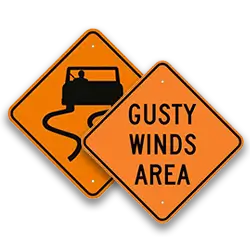


About Our Construction & Temporary Signs
Managing a job site, renovation project, or seasonal event requires clear communication to protect workers and passersby from potential hazards. Our durable signage solutions are designed to effectively mark danger zones, guide pedestrian traffic, and ensure site security during active work. Whether you are overseeing a large commercial development or a quick residential repair, utilizing high-visibility construction signs and reliable warning signs is essential for maintaining safety compliance and reducing liability risks on your property.
- Weather-Resistant Durability: Built to withstand rain, wind, and sun exposure without fading or cracking.
- High-Impact Visibility: Features bold lettering and contrasting colors to ensure critical messages are seen clearly from a distance.
- Quick & Easy Setup: Lightweight materials and pre-drilled options allow for fast mounting on fences, posts, or stands.
- Versatile Applications: Ideal for active work zones, temporary traffic control, and private property management.
Understanding the Different Types of Temporary Construction Signs
Construction Warning Signs for Hazard Awareness
Warning signs are the first line of defense in a comprehensive site safety plan. They are designed to be universally understood, alerting both workers and the public to potential dangers on or near a construction zone. Common examples include signs like "Men at Work," "Road Work Ahead," "Uneven Pavement," and specific hazard alerts for overhead work or heavy machinery crossings. Using clear and conspicuous construction warning signs is a non-negotiable step in maintaining a safe environment, mitigating risks, and preventing costly accidents. These signs must be placed far enough in advance of the hazard to give drivers and pedestrians ample time to react, forming a critical component of your site’s safety protocol and liability management. Properly deployed warning signs create a predictable environment, which is essential for managing the chaotic nature of a busy work zone.
Temporary Traffic Control Signs for Managing Flow
While warning signs alert people to danger, traffic control signs actively direct them. Proper traffic management is critical not only for safety but also for project efficiency and public relations. In this category, you'll find a range of temporary traffic control signs designed to guide vehicle and pedestrian flow through or around your work zone. This includes essential signage such as "Detour," "Lane Closed Ahead," "Flagger Ahead," and arrow boards. These signs must work together as a system to provide clear, unambiguous instructions, preventing confusion that can lead to collisions or traffic jams. By strategically placing these signs, project managers can minimize disruptions, maintain a steady flow of traffic, and ensure that both their crews and the public can navigate the area safely and efficiently.
Site Safety Signs for On-Site Compliance
Beyond the perimeter and public roadways, on-site safety is paramount. Site safety signs are directed primarily at your workforce, subcontractors, and authorized visitors to enforce specific rules and procedures within the construction area itself. These signs are crucial for maintaining Occupational Safety and Health Administration (OSHA) compliance and reinforcing your company’s safety culture. Essential examples include "Hard Hat Area," "Safety Glasses Required," "High Voltage," and "No Trespassing" signs that clearly delineate restricted zones. By displaying these notices prominently, you protect your crew from workplace hazards, communicate critical safety information 24/7, and significantly limit your legal liability in the event of an incident. Effective site safety signage is a clear indicator of a professionally managed and safety-conscious project, a factor that is not lost on workers or inspectors. Now that we've covered the different functions of signs, let's explore the materials they are made from to help you choose the right one for your specific application.
How to Choose the Best Material for Temporary Construction Signs
Coroplast Signs: The Economical Choice for Short-Term Use
When your project timeline is short or your budget is a primary concern, Coroplast signs are often the perfect solution. This material is a type of corrugated plastic—essentially a plastic version of cardboard—making it incredibly lightweight, easy to handle, and highly cost-effective. Despite its low cost, Coroplast is waterproof and weather-resistant, capable of withstanding rain, snow, and sun for several months. For a weekend event, a short-term detour lasting a few weeks, or indoor safety notices, Coroplast signs provide excellent value. They are easily mounted on simple wire stakes, attached to fences with zip ties, or placed in A-frame stands. However, their lightweight nature means they are less suited for high-wind areas or long-term projects where durability is the main priority.
Aluminum Construction Signs: The Durable Standard for Long-Term Projects
For any application demanding longevity and ruggedness, aluminum is the undisputed industry standard. When you need a sign that will endure for the entire duration of a multi-year highway project or one that can be reused across multiple job sites, investing in aluminum construction signs is the most cost-effective decision in the long run. Aluminum is inherently rust-proof, rigid enough to resist bending in high winds, and provides a perfect surface for high-performance reflective sheeting. Standard thicknesses like .063" or .080" offer excellent strength without excessive weight. These signs are the go-to choice for regulatory traffic signs, permanent site entrance signs, and any critical safety message that must remain legible and intact for years, regardless of weather conditions.
Buyer's Guide: Material Comparison
Use this table to quickly decide between Coroplast and Aluminum based on your project's specific needs.
Feature Coroplast Signs Aluminum Signs Durability Low to Medium; susceptible to bending and sun degradation over time. High; rust-proof, rigid, and resistant to weather and impact. Cost Low; most economical option for temporary use. Medium to High; higher initial investment but better long-term value. Typical Lifespan 3-12 months, depending on sun and wind exposure. 5-10+ years, depending on sheeting and environment. Best Use Case Short-term projects, events, yard signs, indoor notices. Long-term projects, regulatory traffic control, reusable site signs.
Vinyl Banners and Decals for Versatile Applications
Vinyl provides a unique combination of durability and flexibility that neither rigid plastic nor metal can offer. For large-format messaging, vinyl banners are an excellent choice for attaching to construction site fences, scaffolding, or buildings. They can be printed with full-color graphics, including company branding, project renderings, and safety slogans, turning a plain fence into a powerful communication tool. Vinyl also comes in adhesive-backed forms, perfect for creating decals for heavy machinery, hard hats, or directional arrows on concrete barriers. When choosing vinyl, consider the weight (typically measured in ounces) and finish (matte reduces glare, while gloss offers vibrant colors). This versatility makes vinyl an invaluable material for a wide range of custom and high-impact applications on any job site. Now that you've selected a material, ensuring your sign is legally compliant and visible is the next critical step.
Navigating MUTCD Compliance and Visibility Requirements
What is MUTCD Compliance and Why Does It Matter?
The Manual on Uniform Traffic Control Devices (MUTCD) is the federal standard that governs all traffic control devices, including the temporary signs used in construction zones. MUTCD compliance is not optional; it is a legal requirement. The manual dictates the precise specifications for sign shape, color, size, and symbology to ensure uniformity across the nation. This uniformity is what allows drivers to instantly recognize a "Stop" sign or a "Lane Merge" symbol, regardless of where they are. For project managers, adhering to these standards is crucial for two main reasons: public safety and legal liability. Using non-compliant signs can create confusion, lead to accidents, and expose your company to significant legal and financial penalties. Ensuring your Construction & Temporary Signs meet MUTCD standards is the only way to guarantee they are effective and legally sound.
Pro Tip: Always check with your local municipality or state Department of Transportation. They may have specific bylaws or supplementary standards that go beyond the federal MUTCD requirements, especially concerning sign placement and mounting heights.
Choosing the Right Reflective Sheeting for Day and Night Visibility
A sign is useless if it cannot be seen. Visibility, especially during dawn, dusk, and at night, is achieved through the use of reflective sheeting. This material contains microscopic glass beads or prisms that bounce light from a vehicle's headlights back toward the driver's eyes. There are several grades of sheeting, and choosing the right one is a critical safety decision. For a non-roadway application like a parking lot or a slow-speed private drive, standard Engineer Grade might suffice. However, for any sign placed along a public road, especially one with higher speeds, you must use a higher grade like High-Intensity Prismatic (HIP) sheeting. HIP offers superior reflectivity from a wider range of angles, making signs brighter and more legible from greater distances. Choosing the correct grade ensures your high-visibility signs give drivers enough time to react safely, preventing last-second maneuvers and potential collisions.
| Sheeting Grade | Description | Typical Use Case |
|---|---|---|
| Engineer Grade (EG) | Basic enclosed lens sheeting. Meets minimum reflectivity for some applications. | Non-critical signs in low-speed areas like parking lots, or for daytime-only use. |
| High-Intensity Prismatic (HIP) | Non-metalized microprismatic lens sheeting. Significantly brighter than EG. MUTCD-compliant for most roadways. | Construction zones, highway signs, warning signs, and regulatory signs on public roads. |
| Diamond Grade (DG) | Full-cube prismatic technology offering the highest level of reflectivity, especially at wide angles. | High-speed interchanges, overhead signs, and areas with high ambient light (e.g., city streets). |
Key Specifications: Sign Size, Lettering, and Color
The MUTCD also provides detailed guidance on the physical attributes of a sign to ensure legibility. The required sign size and letter height are directly related to the speed of the road where the sign will be placed. A sign meant for a 65 mph highway must be significantly larger, with taller letters, than a sign used in a 25 mph residential zone. As a rule of thumb, you need at least one inch of letter height for every 30-40 feet of desired legibility distance. Color is another instantly recognizable feature of temporary traffic signage. Orange with a black legend is exclusively reserved for temporary traffic control, warning of construction, maintenance, or utility work ahead. This immediate color recognition signals to drivers that they are entering a work zone and must be prepared for changing conditions. Making the right choices in material and compliance is only half the battle; proper installation is what ensures your signs perform as intended.
Temporary Construction Sign Mounting Options and Installation
Mounting Signs on Posts for Roadside Placement
For signs that need to remain in a fixed location along a roadway, post mounting is the most secure and compliant method. The most common post types for temporary signs are steel U-channel posts or square tube posts, chosen for their strength and ease of installation. When installing, it’s critical to follow regulatory guidelines for mounting height—typically 5 feet from the ground to the bottom of the sign in rural areas and 7 feet in urban or pedestrian areas. This ensures the sign is visible above parked cars and other obstructions. Use appropriately sized bolts, nuts, and washers to securely fasten the sign to the post, preventing it from spinning or detaching in high winds. A properly installed post-mounted sign is stable, visible, and built to withstand the rigors of a long-term construction environment.
Using Stands and A-Frames for Portable Signage
In many construction scenarios, conditions change daily. For dynamic environments like rolling lane closures, flagging operations, or short-term event parking, portable mounting systems are indispensable. Heavy-duty sign stands, often with spring-loaded bases to handle wind gusts, are perfect for holding large roll-up vinyl or rigid aluminum signs. These can be deployed in minutes and are designed to break away safely if struck by a vehicle. For smaller, more localized warnings, A-frame or "sandwich board" signs are ideal. They are self-supporting, easy to move, and perfect for directing foot traffic or placing at the immediate start of a work area. These versatile systems provide the flexibility needed to adapt your signage strategy as the project evolves.
Attaching Signs to Fences and Barriers
Construction sites are often enclosed by chain-link fences or lined with concrete barriers, both of which provide a convenient surface for mounting signs. When attaching to fences, use heavy-duty UV-resistant zip ties or steel wire to secure the sign at all four corners. This prevents it from flapping in the wind, which can damage the sign and create a distracting noise. For concrete barriers, specialized clamps or a simple bolt-through method can be used. The key is to ensure the sign is mounted flush and that no hardware protrudes in a way that could snag a pedestrian or worker.
Safety Warning: An improperly secured sign can become a dangerous projectile in high winds. Always use multiple attachment points and inspect fence-mounted signs regularly, especially after storm fronts, to ensure they remain secure.
With a solid understanding of sign types, materials, compliance, and installation, you are now well-equipped to select the right standard signs. However, many projects have unique needs that require a more tailored approach.
Ordering Custom Construction Signs for Your Job Site
How to Customize Your Temporary Signs
While standard MUTCD signs cover most traffic and safety needs, many situations benefit from custom signage. You may need to direct truck traffic to a specific site entrance, display your company logo for branding and accountability, provide a project contact number, or communicate a unique safety hazard not covered by a standard sign. Customizing your Construction & Temporary Signs allows you to convey precise information tailored to your specific site. The process is straightforward: you can add text, upload your logo, and specify unique layouts. This ensures your message is not only effective and professional but also reinforces your company's presence and commitment to clear communication on the job site.
Understanding Production and Turnaround Times
We understand that in the construction industry, timeliness is everything. Delays in receiving critical safety signage can halt progress and compromise safety. That's why it’s important to understand the production timelines when planning your order. Simple, in-stock signs can often ship within a day or two. However, custom signs, especially those printed on aluminum or requiring unique graphic design, will have a longer lead time. We work diligently to provide clear and accurate estimates for production and shipping, allowing you to coordinate your procurement with your project schedule. Planning ahead ensures your signs arrive on-site exactly when you need them, keeping your project safe, compliant, and on track. If you're ready to create signage for your unique needs, you can easily design your custom sign online or reach out to our expert team for guidance and support.
